
All endodontic treatments share the same goal: to preserve your teeth for as long as possible.
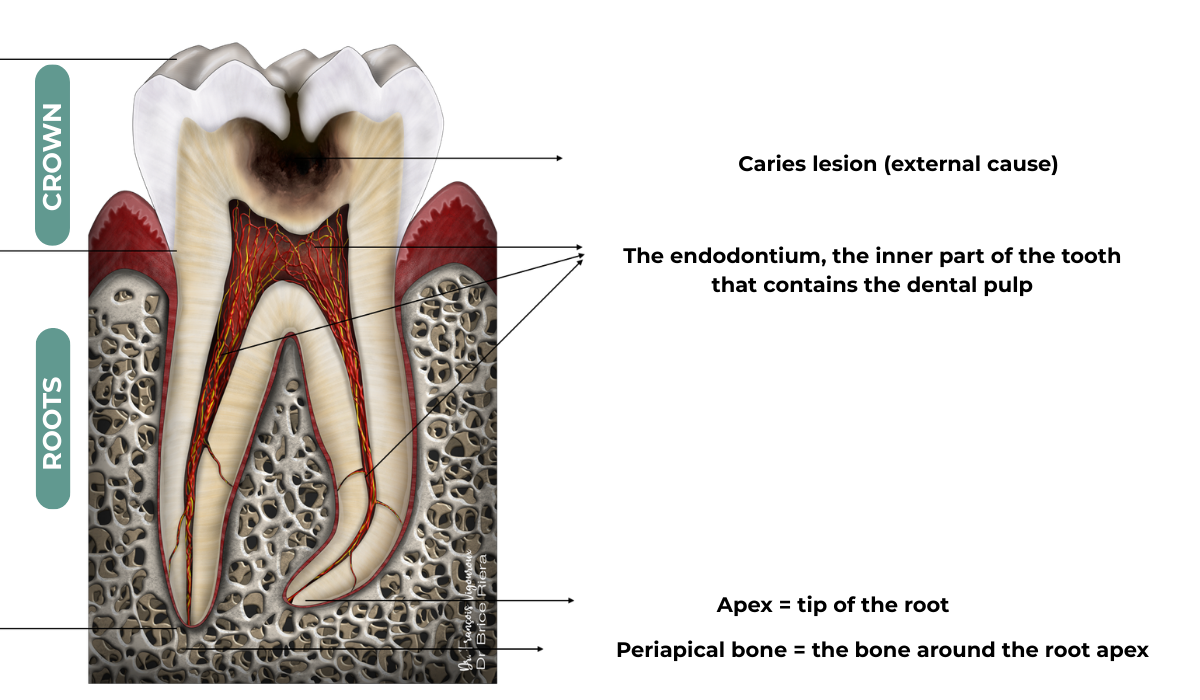
The endodontium is the inside of the tooth, where the dental pulp is located (nerves, blood vessels, etc.).
In the event of external injury (such as dental trauma, tooth decay, etc.), the pulp may become inflamed and therefore painful.
When the pulpal diagnosis allows it, there are techniques that make it possible to preserve the dental pulp.
Indirect pulp capping
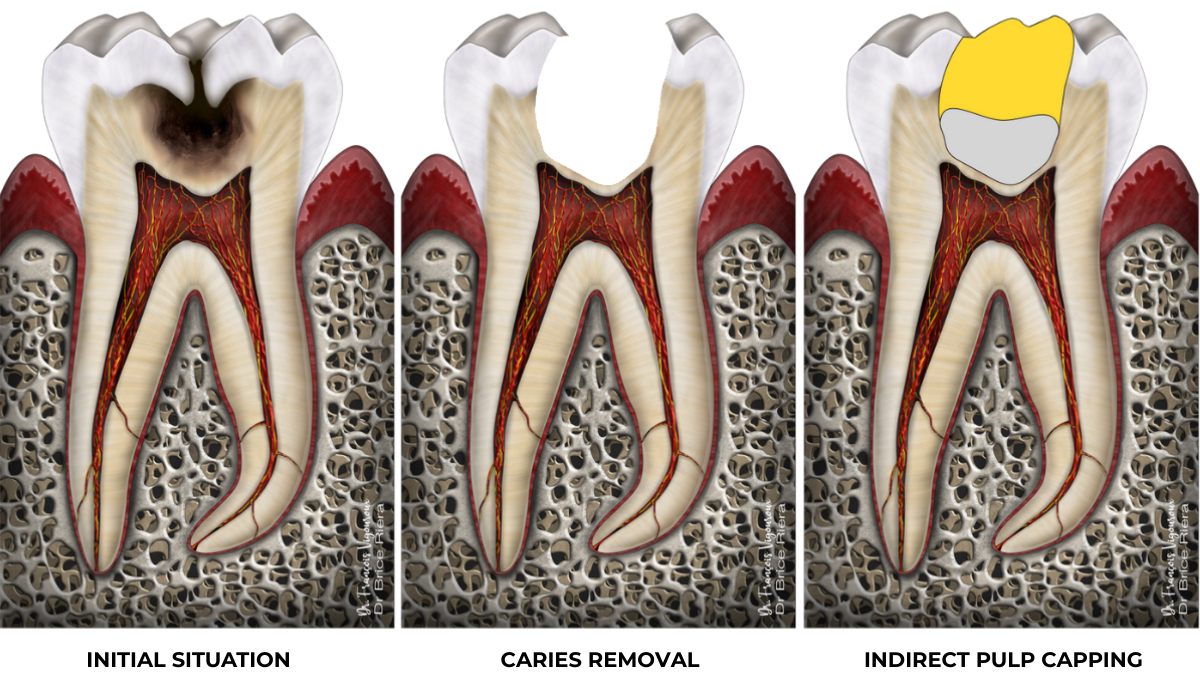
If, after removal of the carious lesion (middle diagram above), we are close to the dental pulp but without exposing it, a bioactive biomaterial (such as a bioceramic cement) can be placed on the dentine closest to the pulp.
Right-hand diagram: 1 = bioactive biomaterial such as bioceramic cement, 2 = coronal restorative biomaterial.
Clinical case of tooth 17 (upper right second molar)
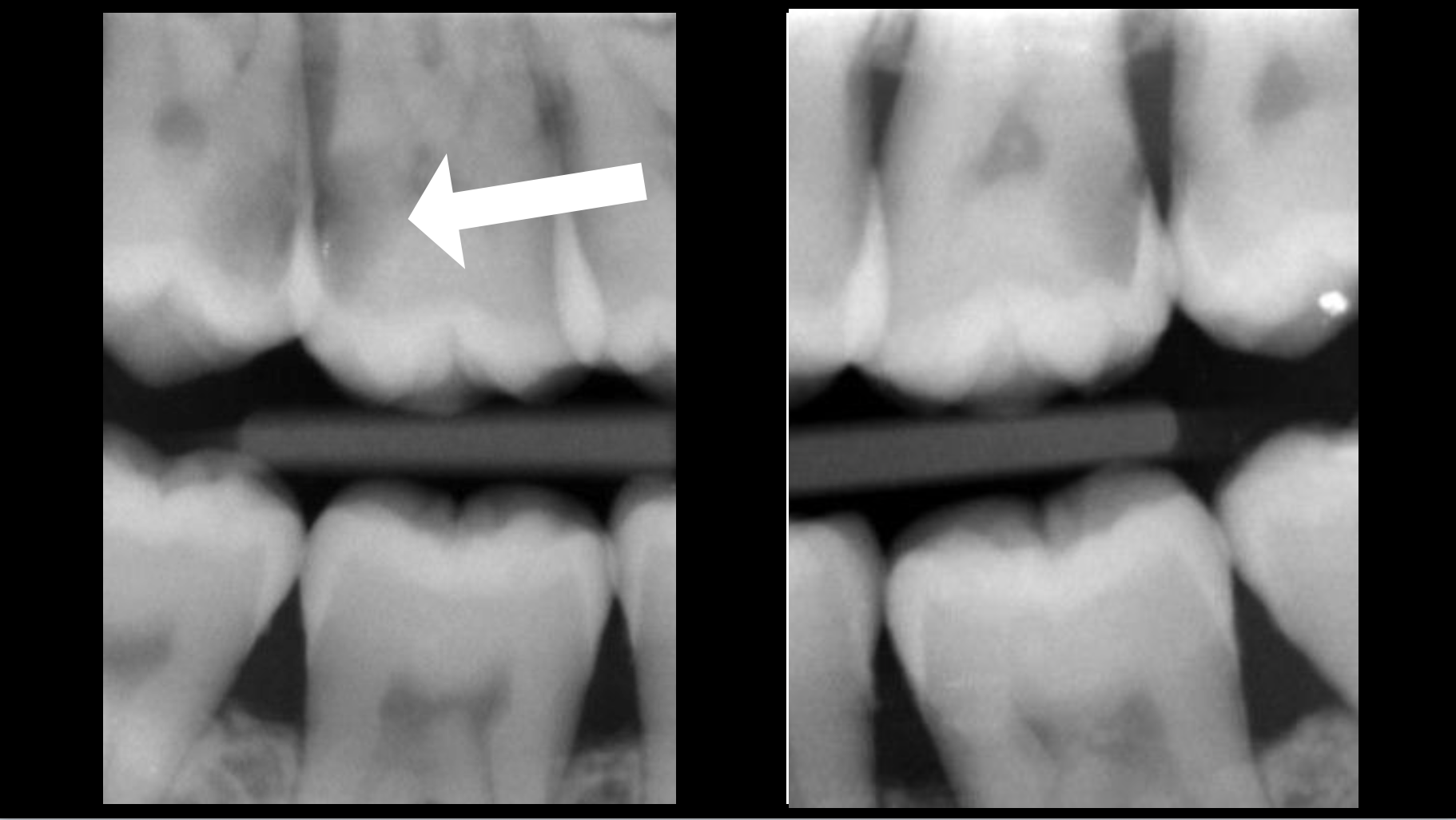
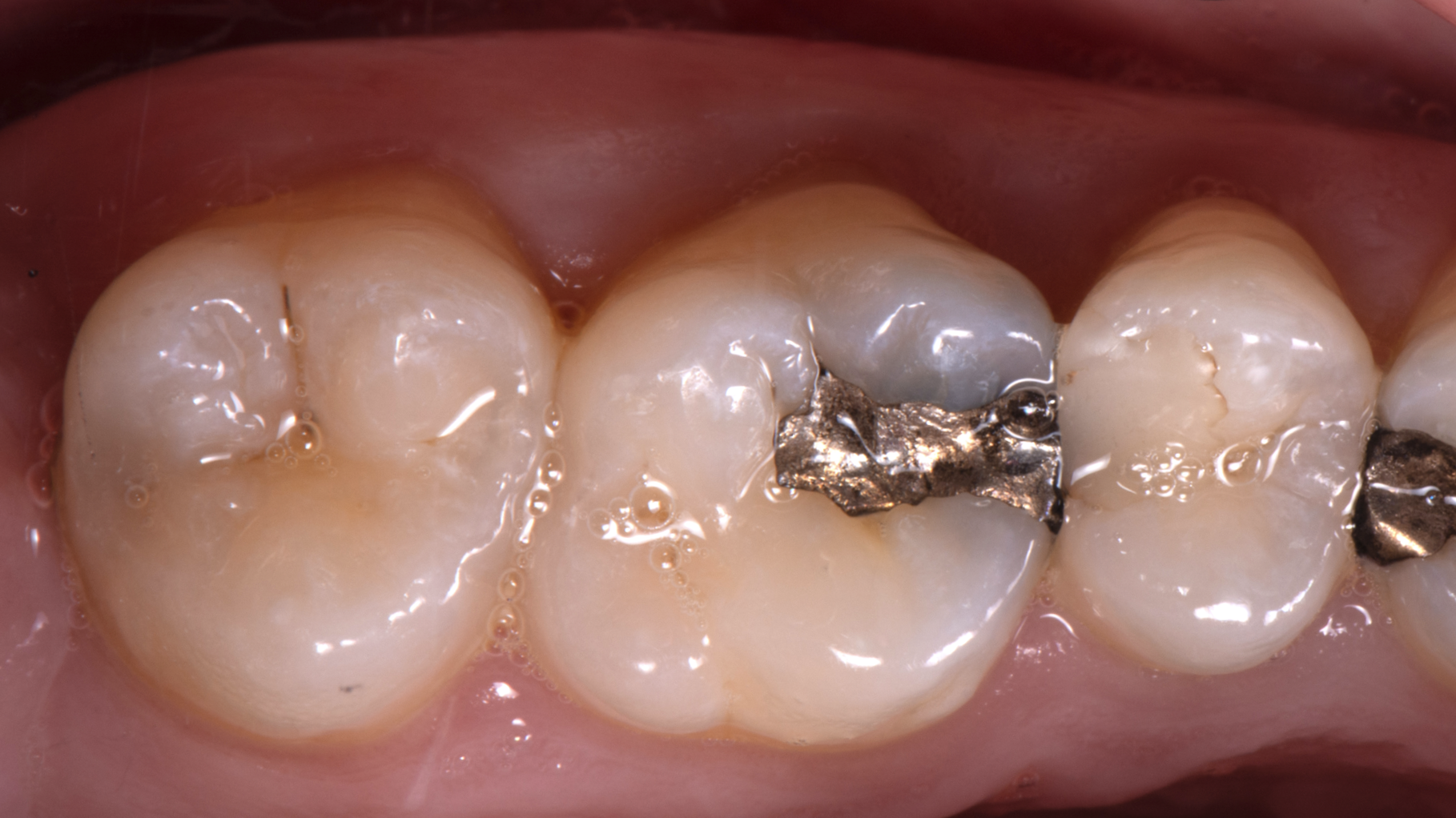
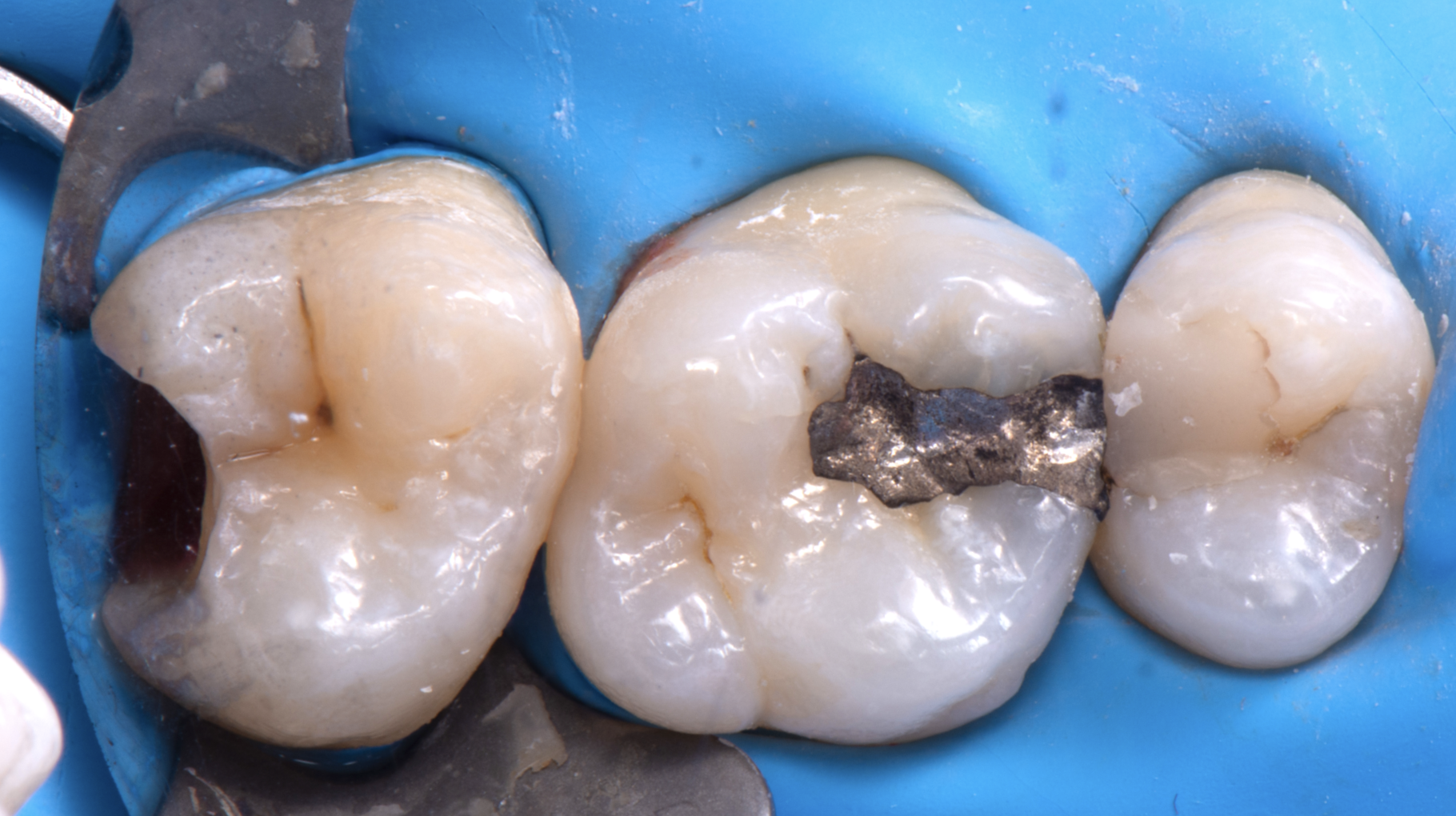
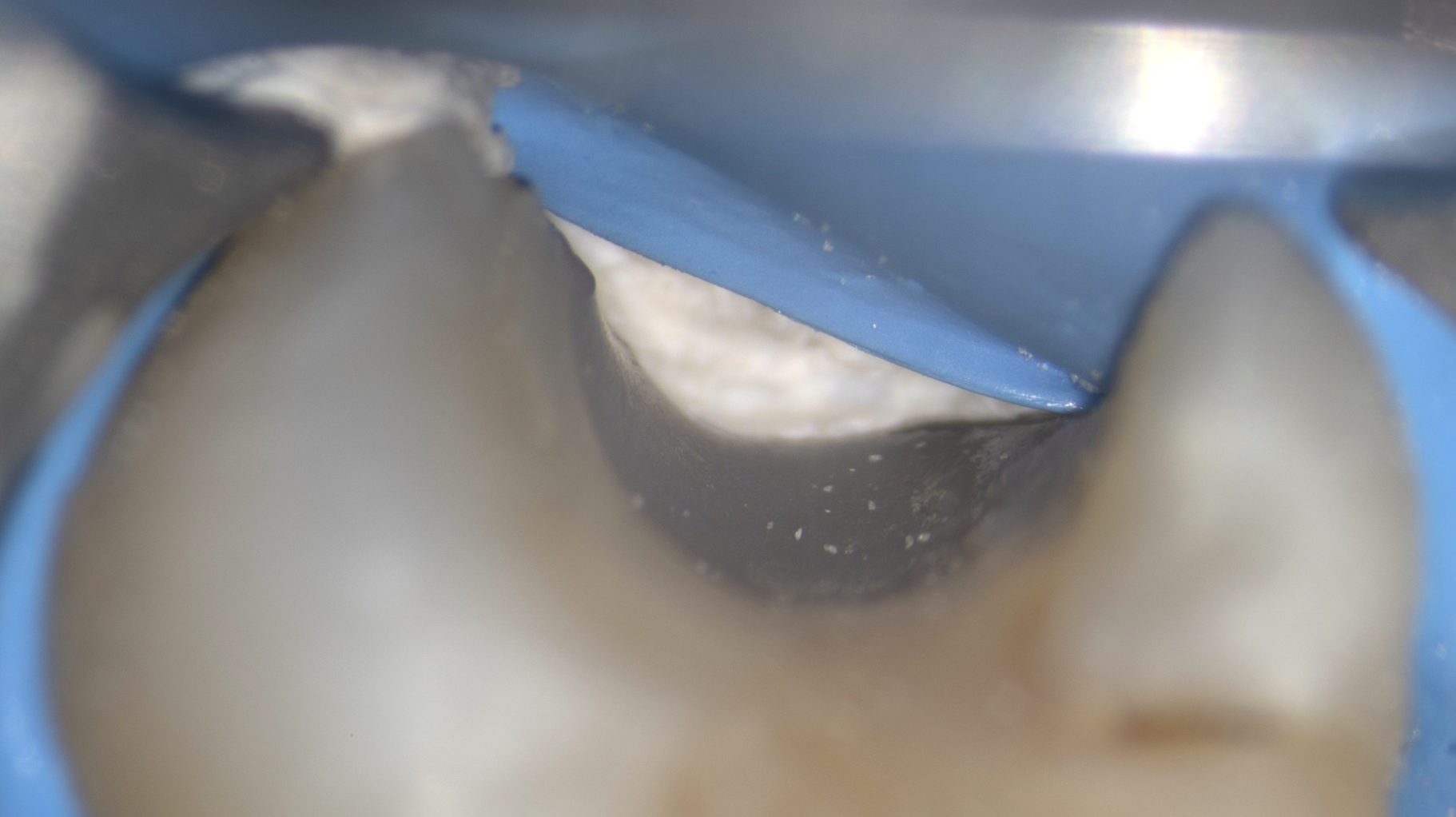
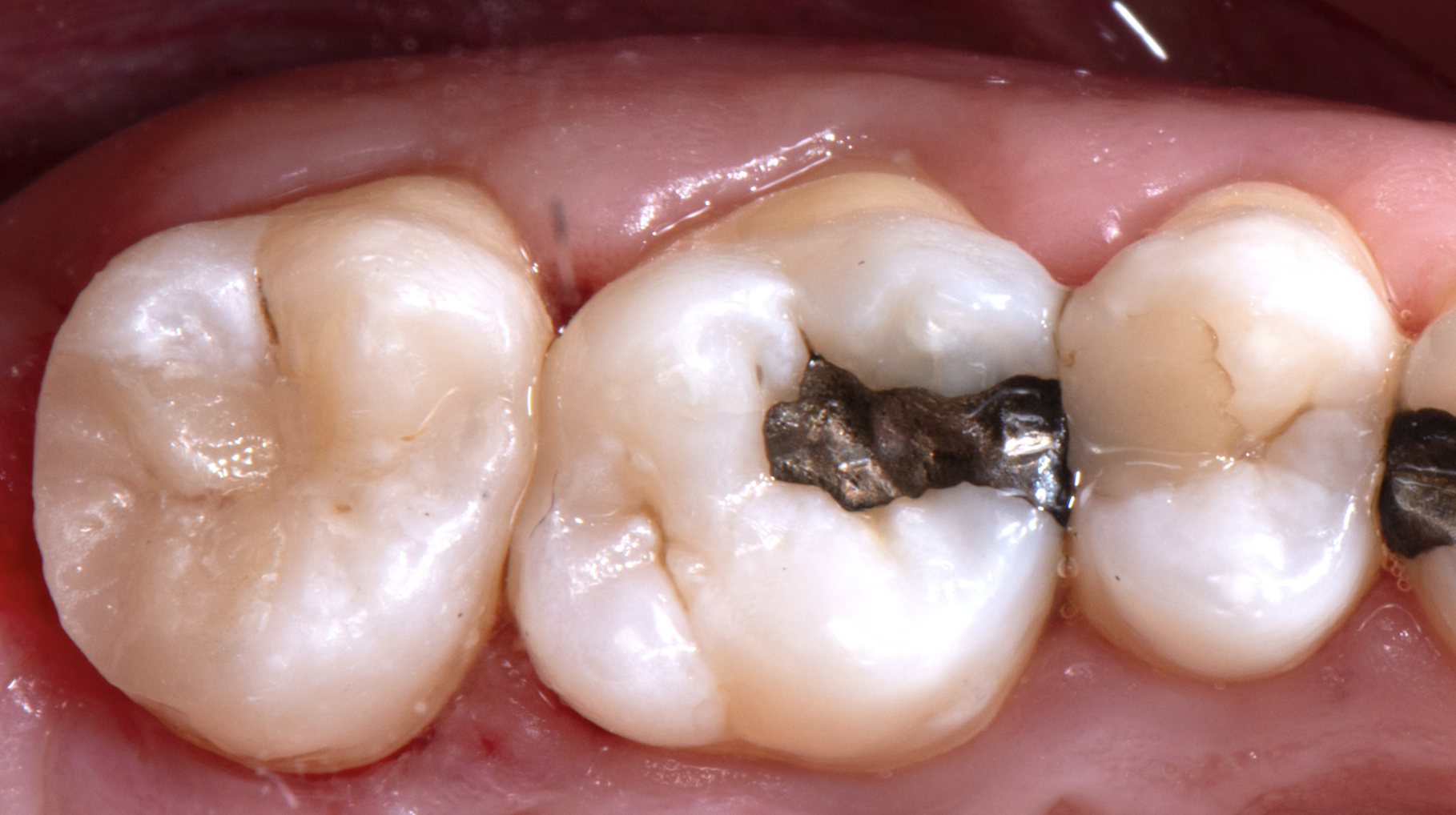
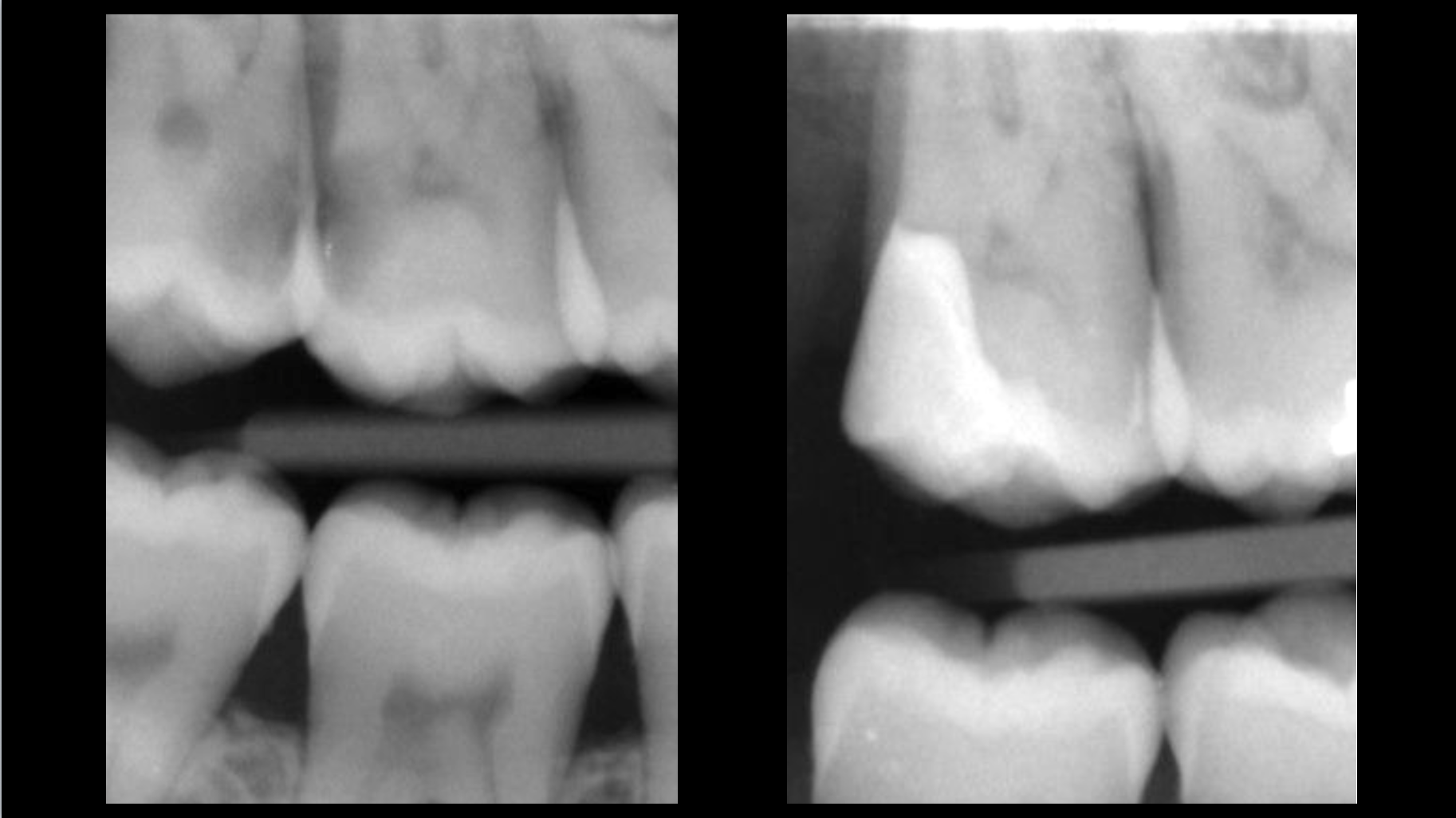
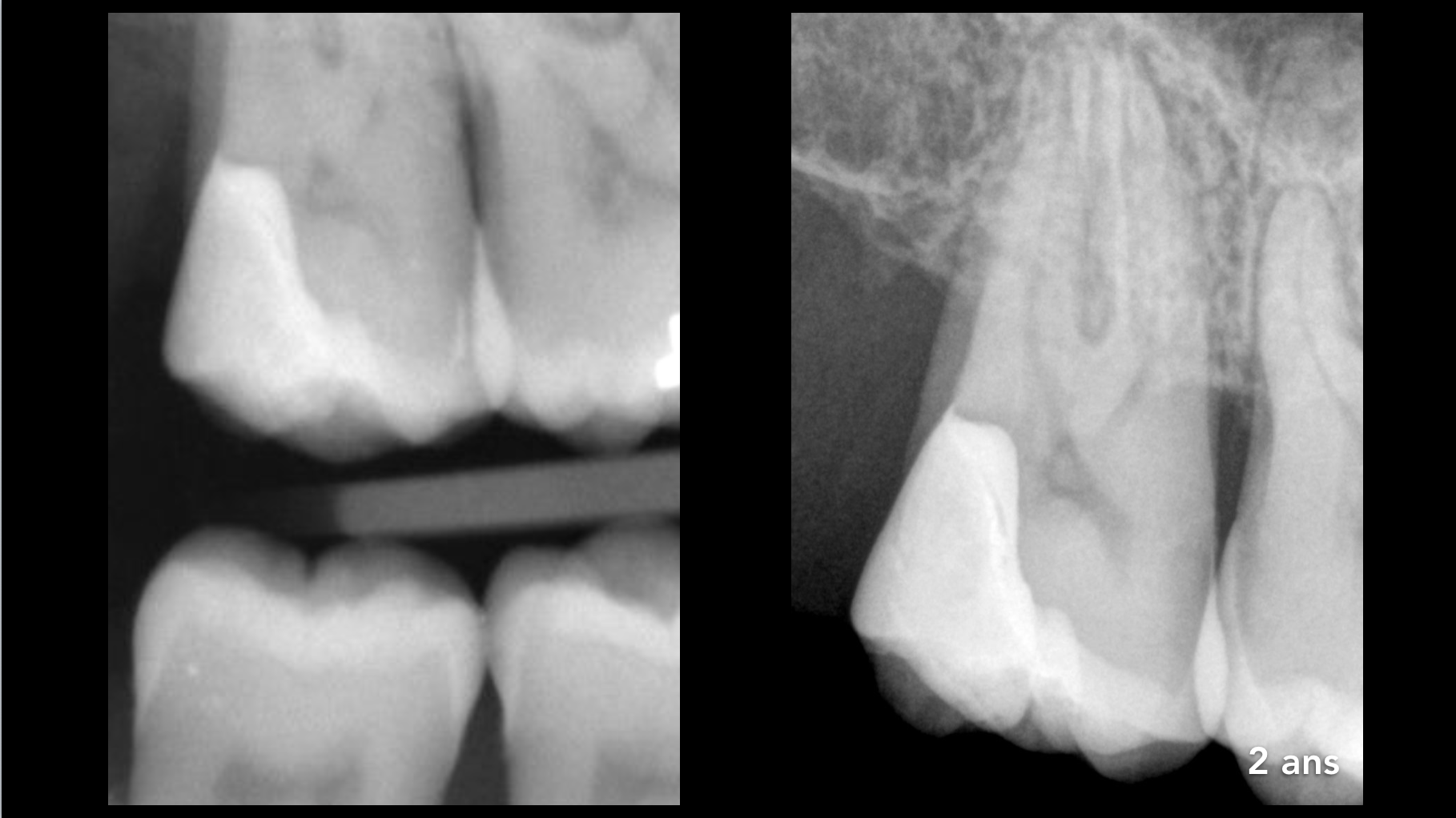
Indirect pulp capping: 96.4% success rate
Direct pulp capping
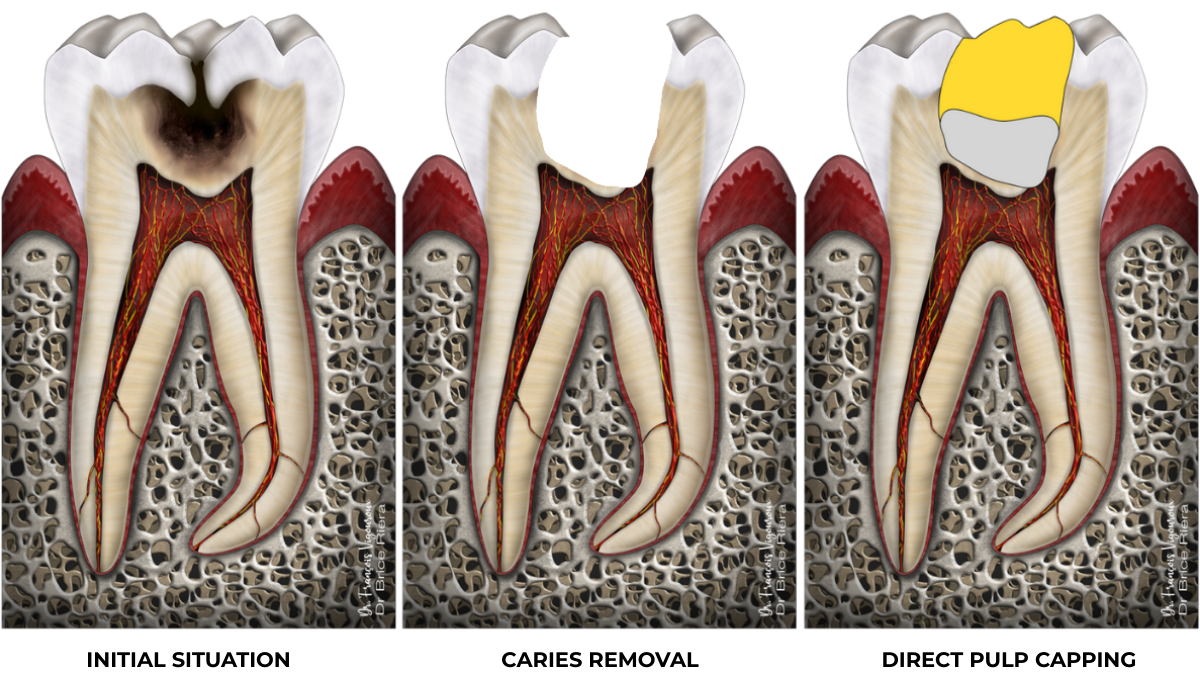
If removal of the carious lesion (middle diagram) extends to the dental pulp, a bioactive biomaterial (such as a bioceramic cement) can be placed directly over the exposed pulp.
Right-hand diagram: 1 = bioactive biomaterial such as bioceramic cement, 2 = coronal restorative biomaterial
Clinical case
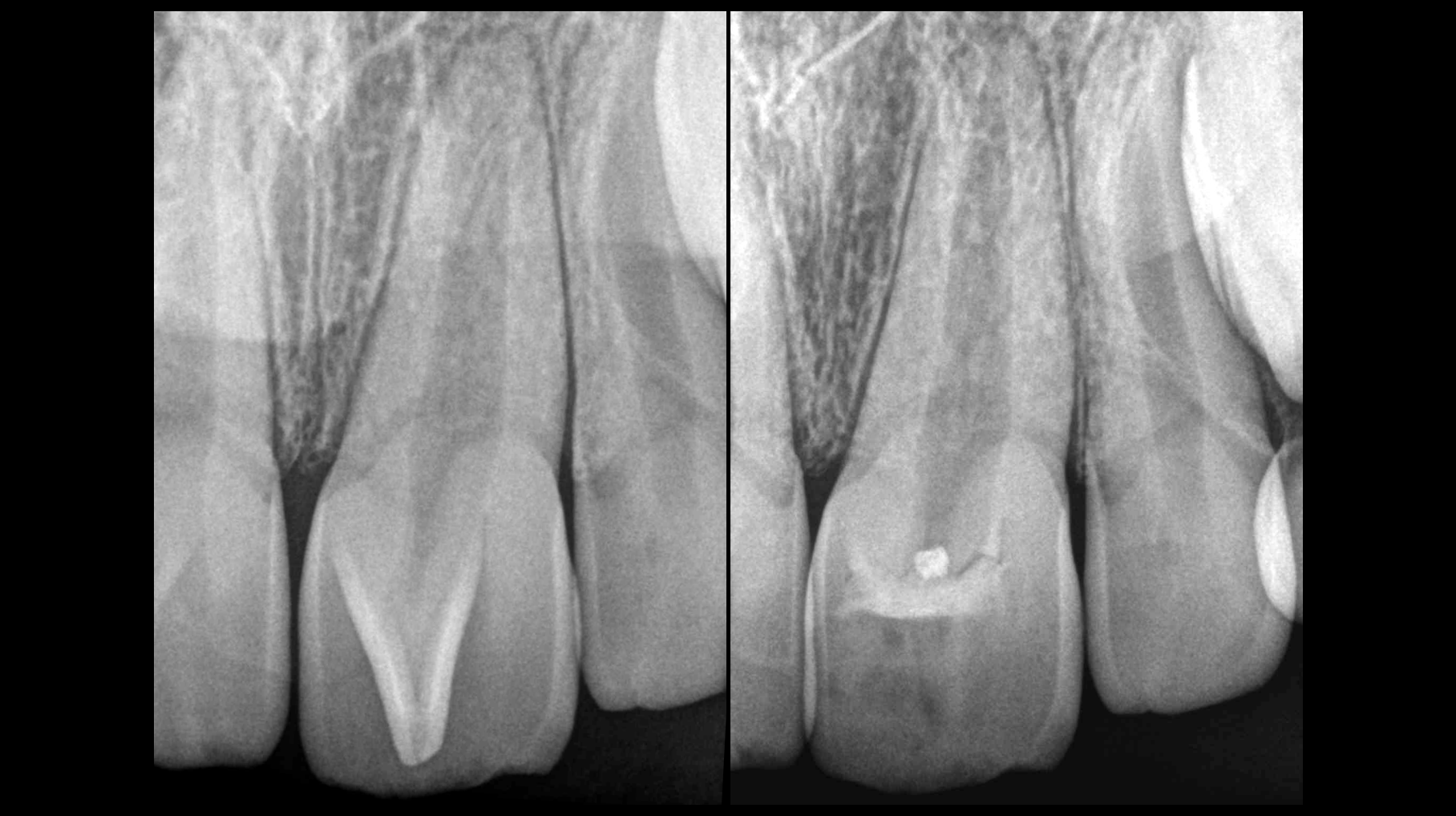
Direct pulp capping: 90.4% success rate
Partial pulpotomy
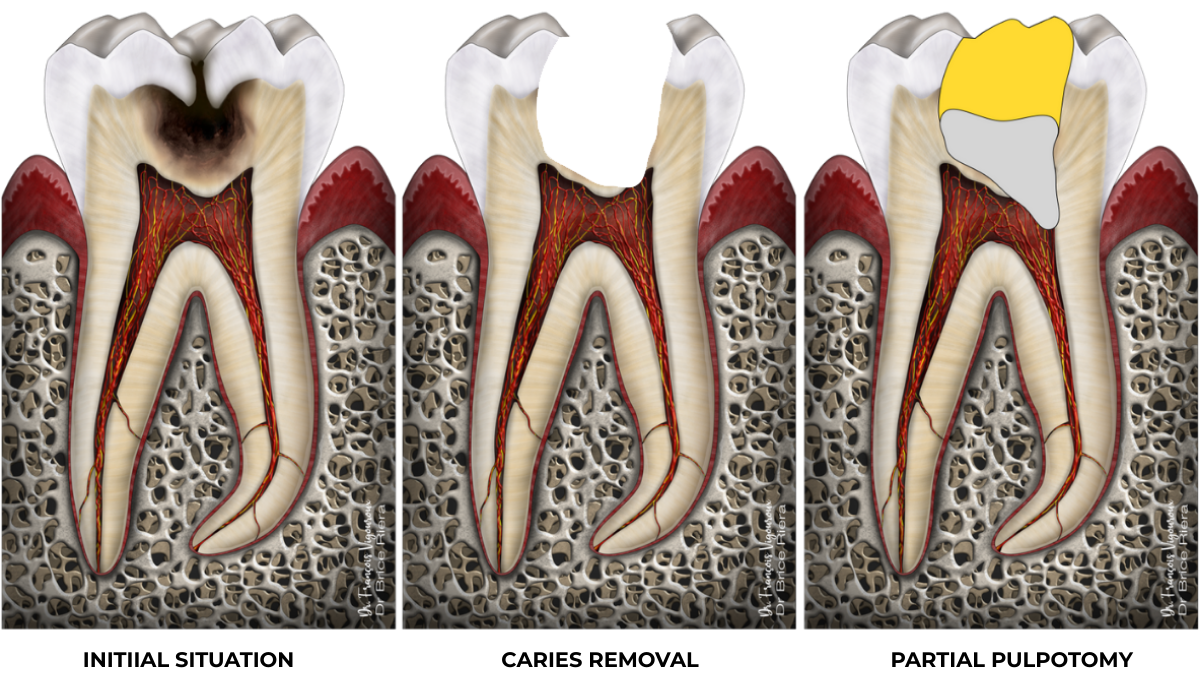
Sometimes it is necessary to go deliberately a little further into the pulp. This is the case when haemostasis cannot be achieved, or when a minimal form of containment is needed to hold the bioactive biomaterial in place.
Clinical case
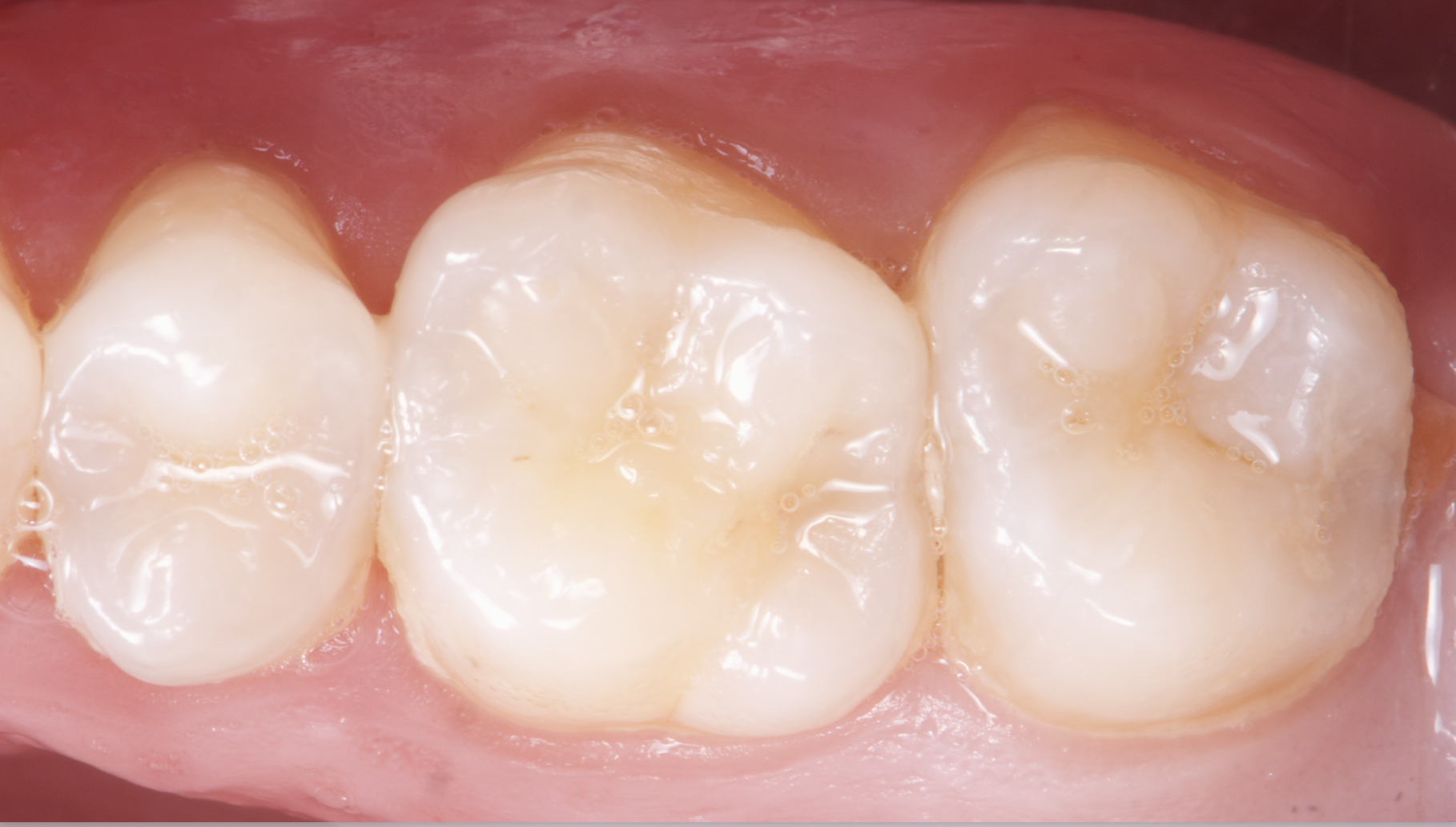
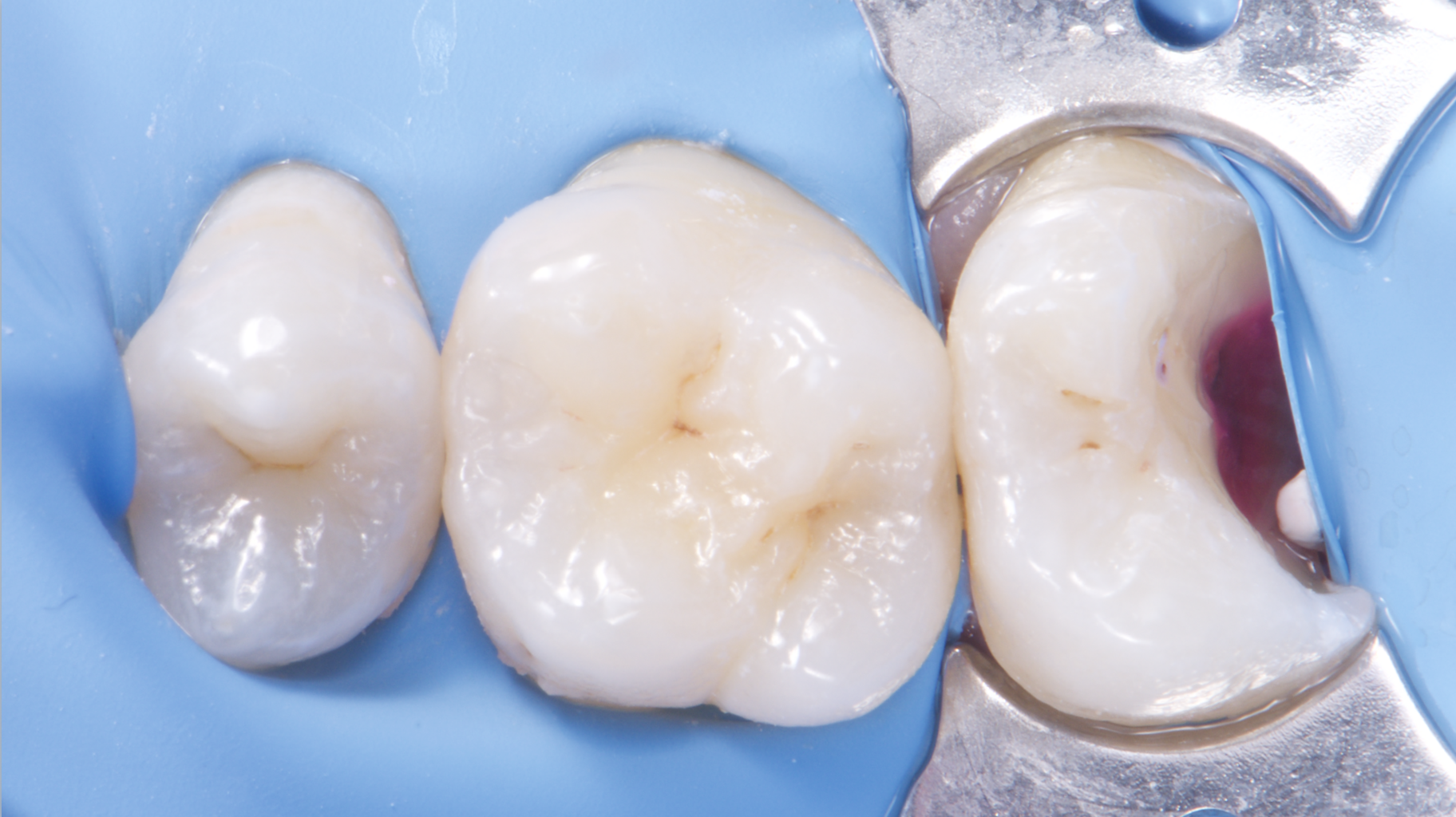
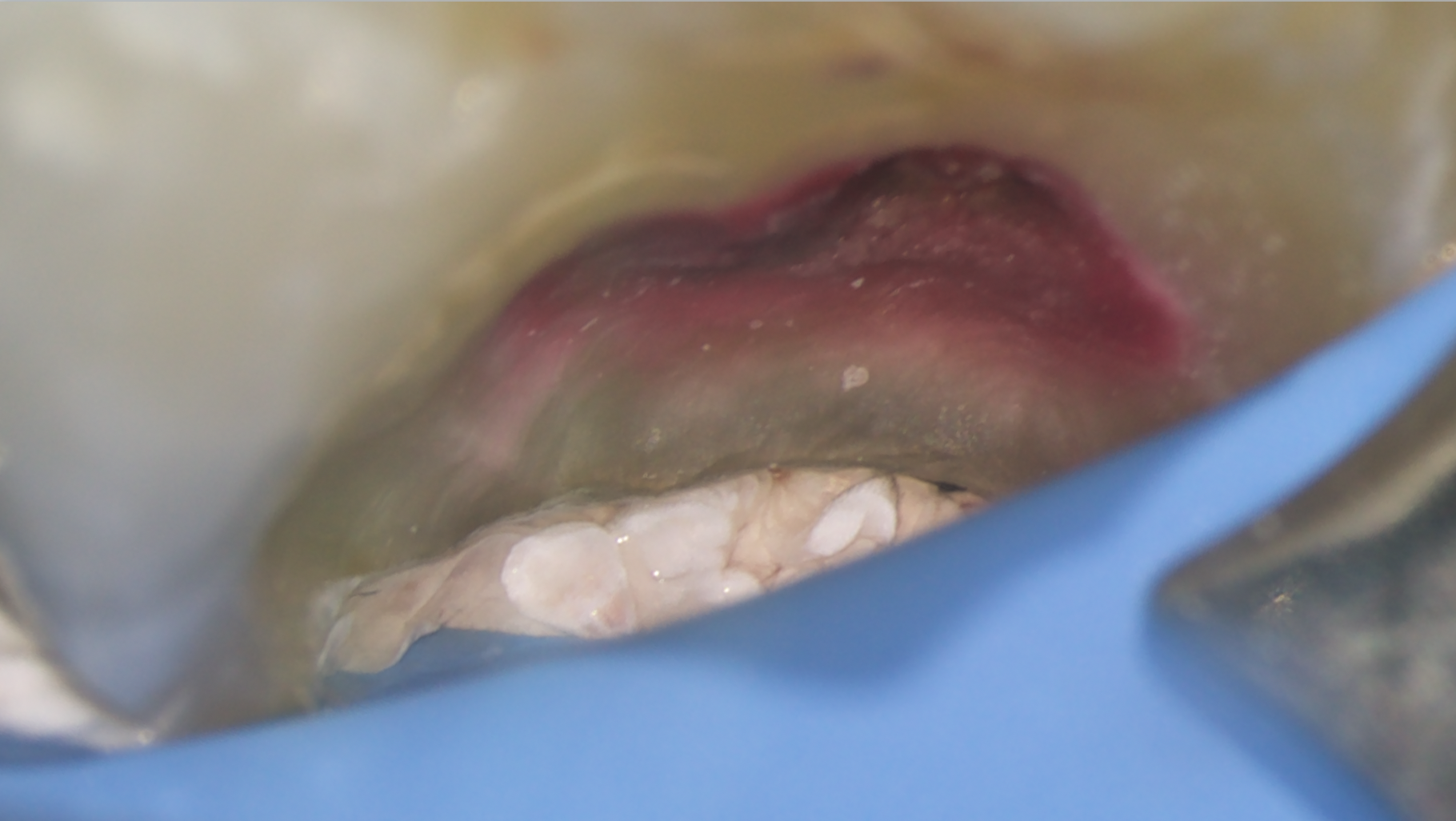
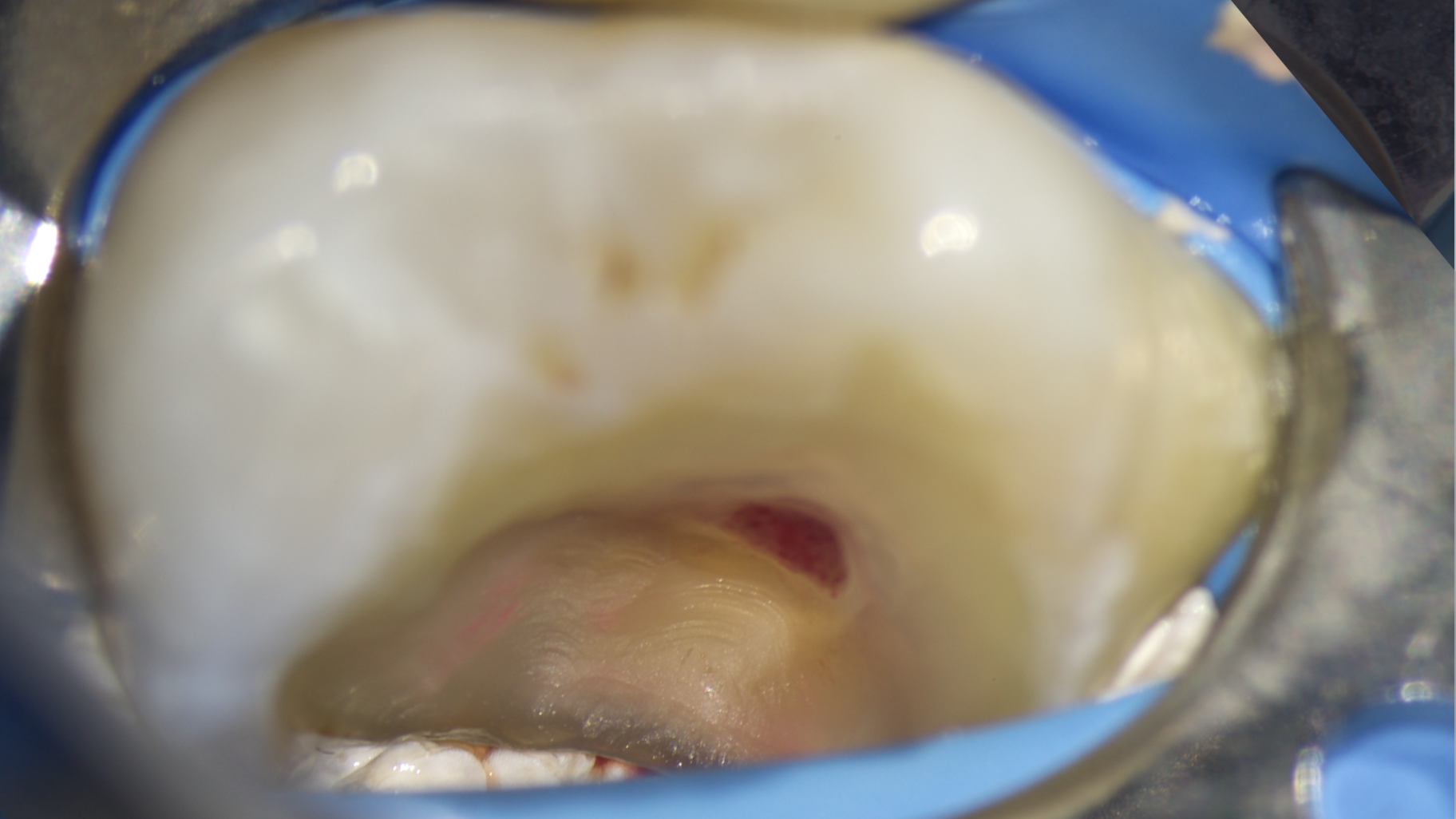
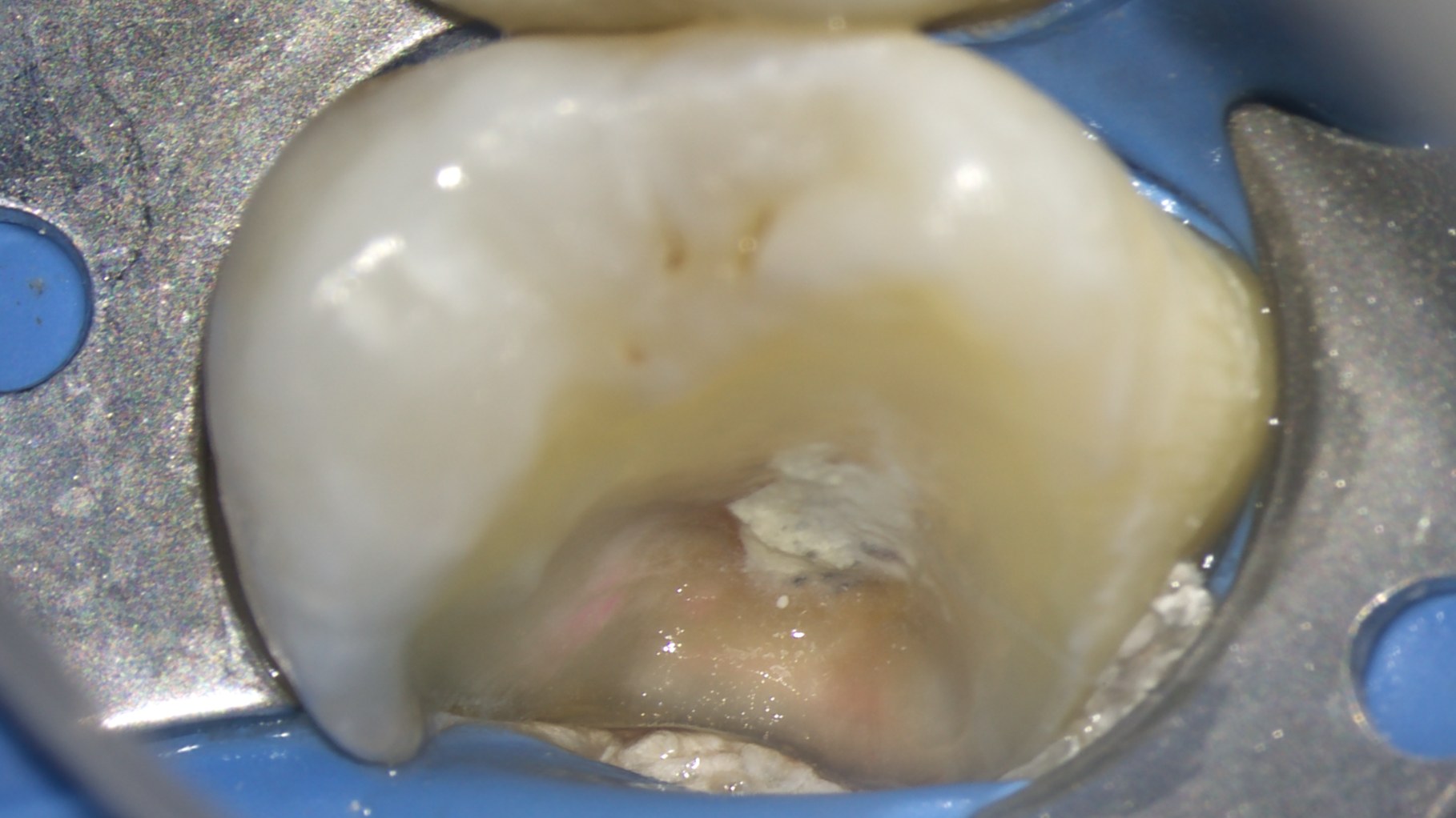
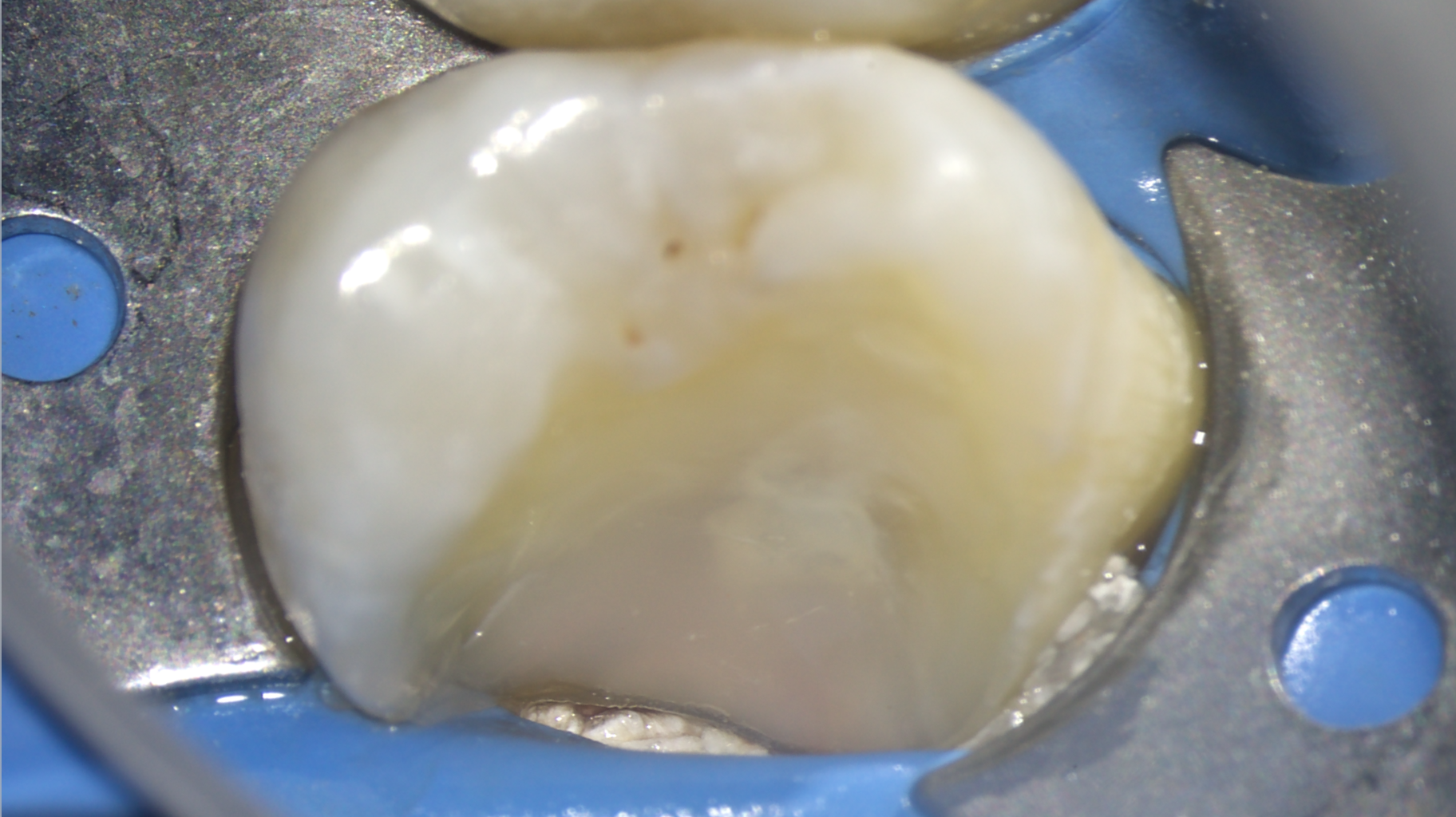
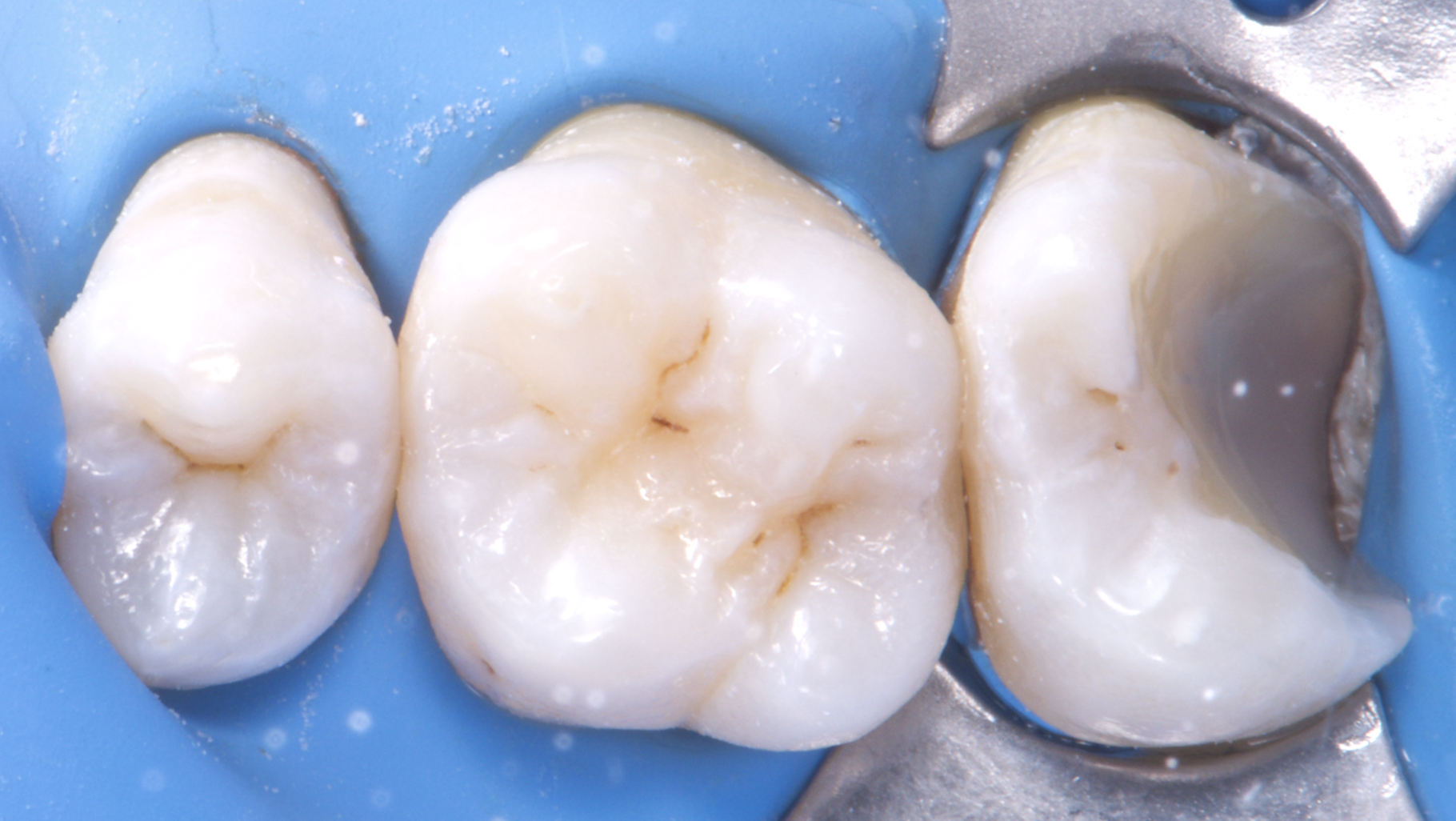
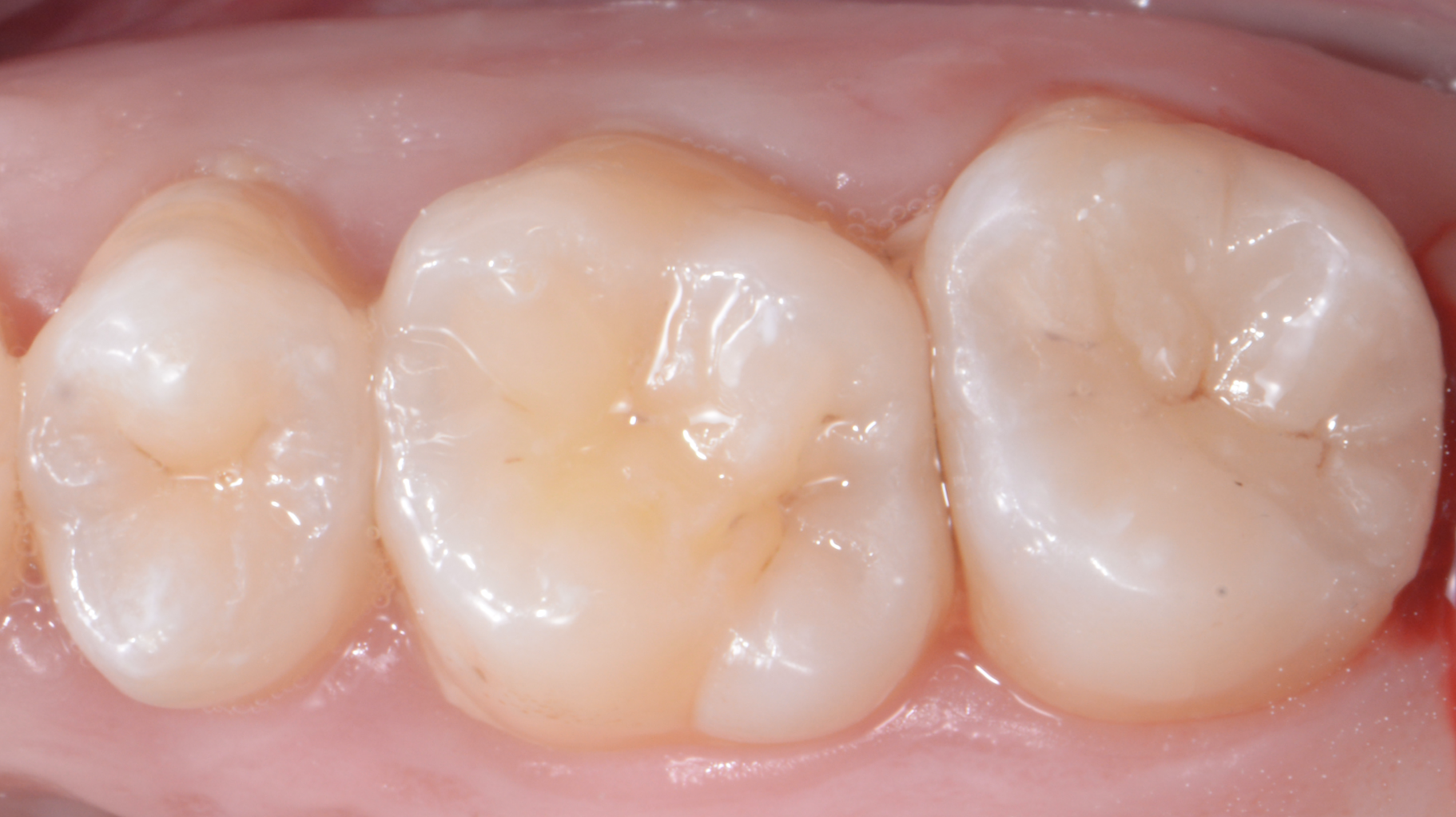
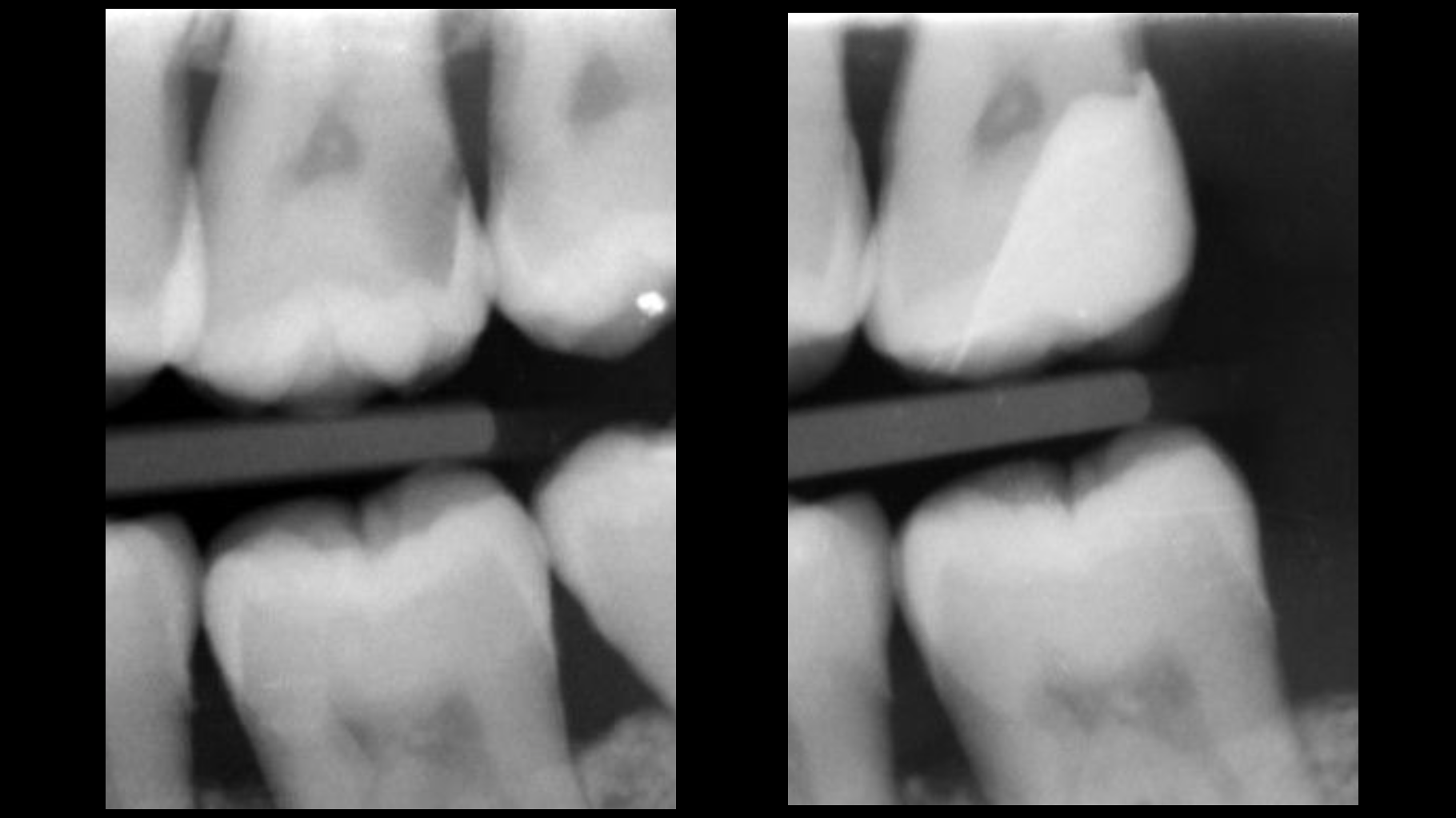
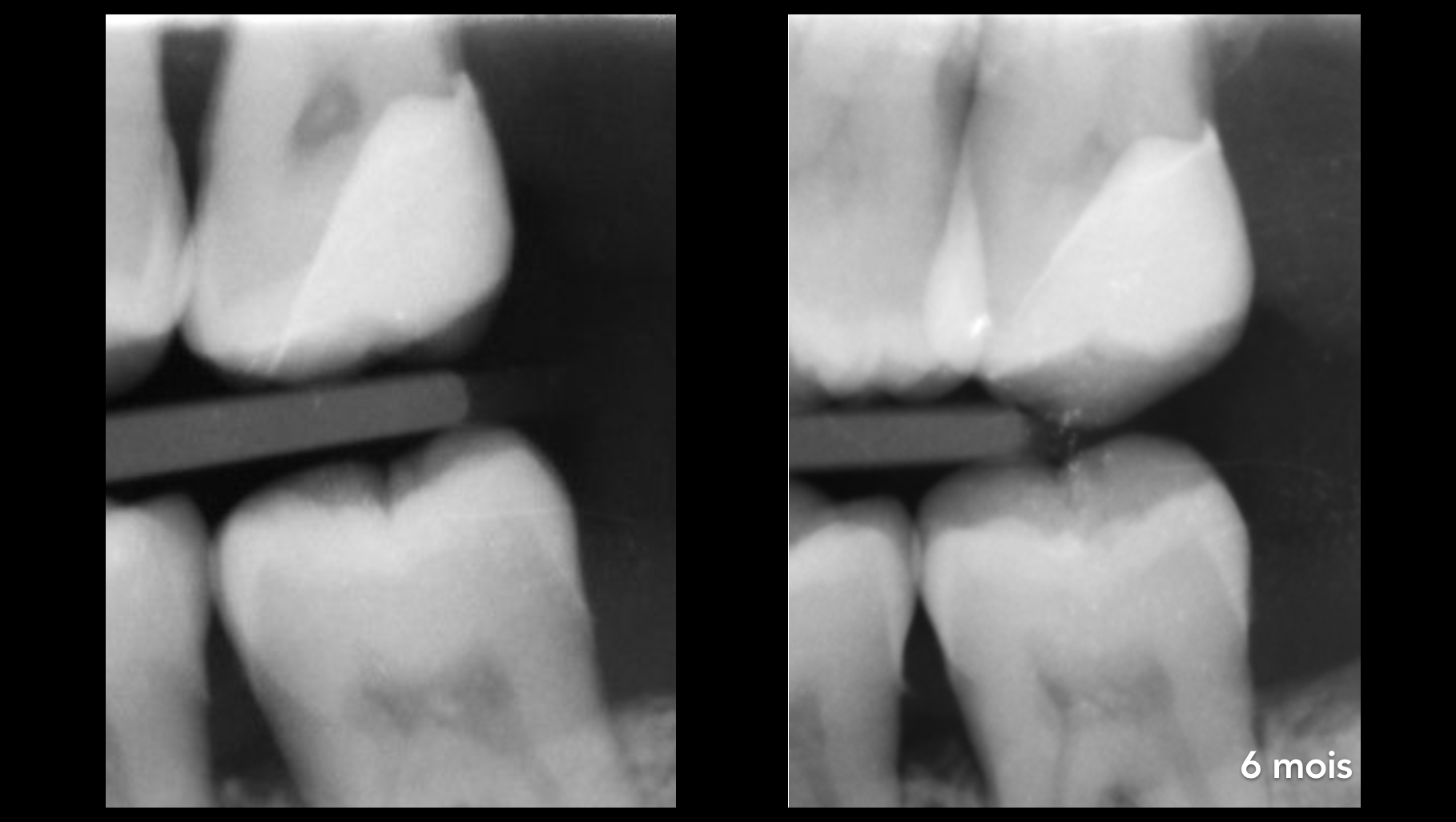
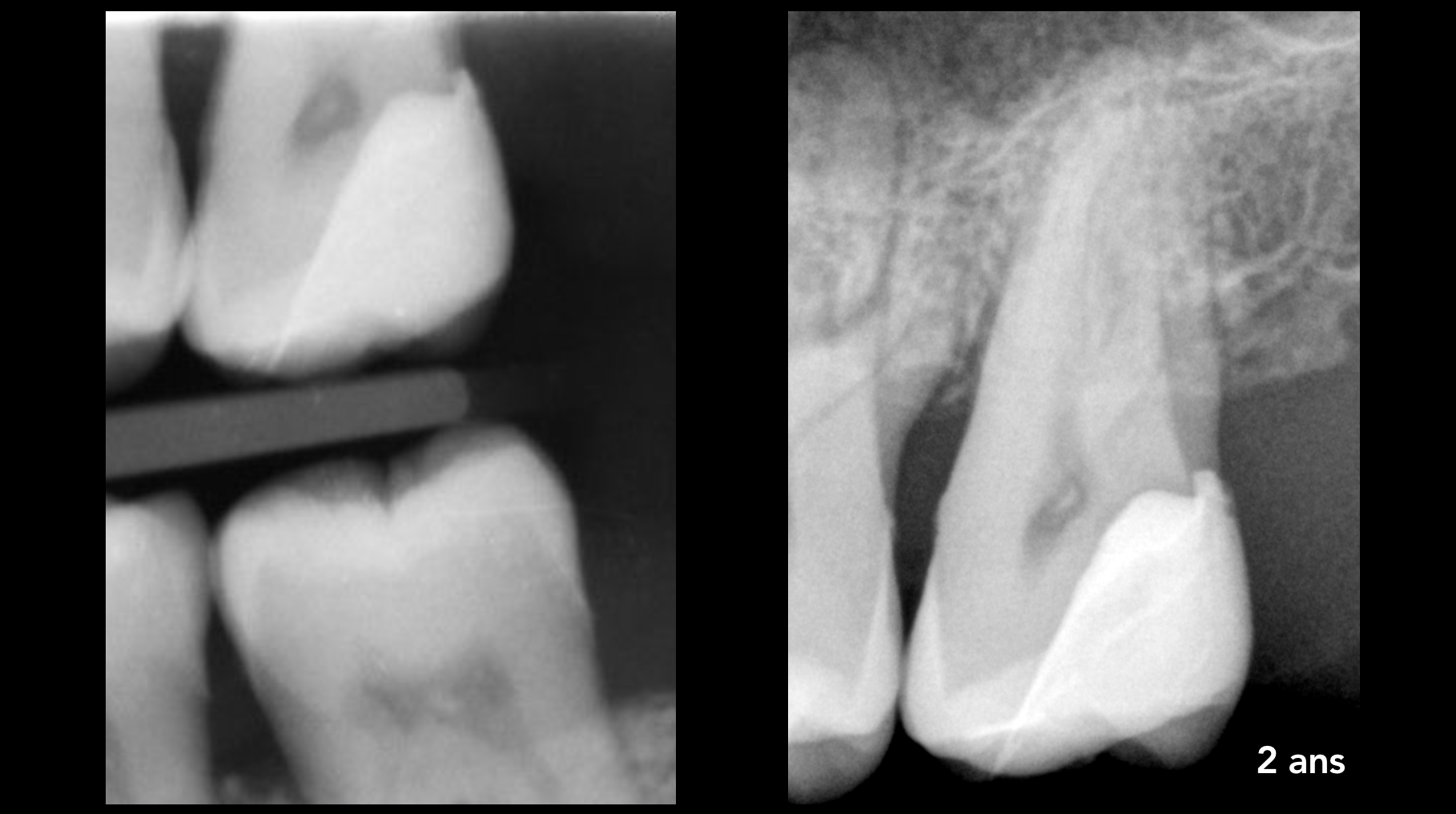
Partial pulpotomy: 88.2% success rate
Coronal pulpotomy
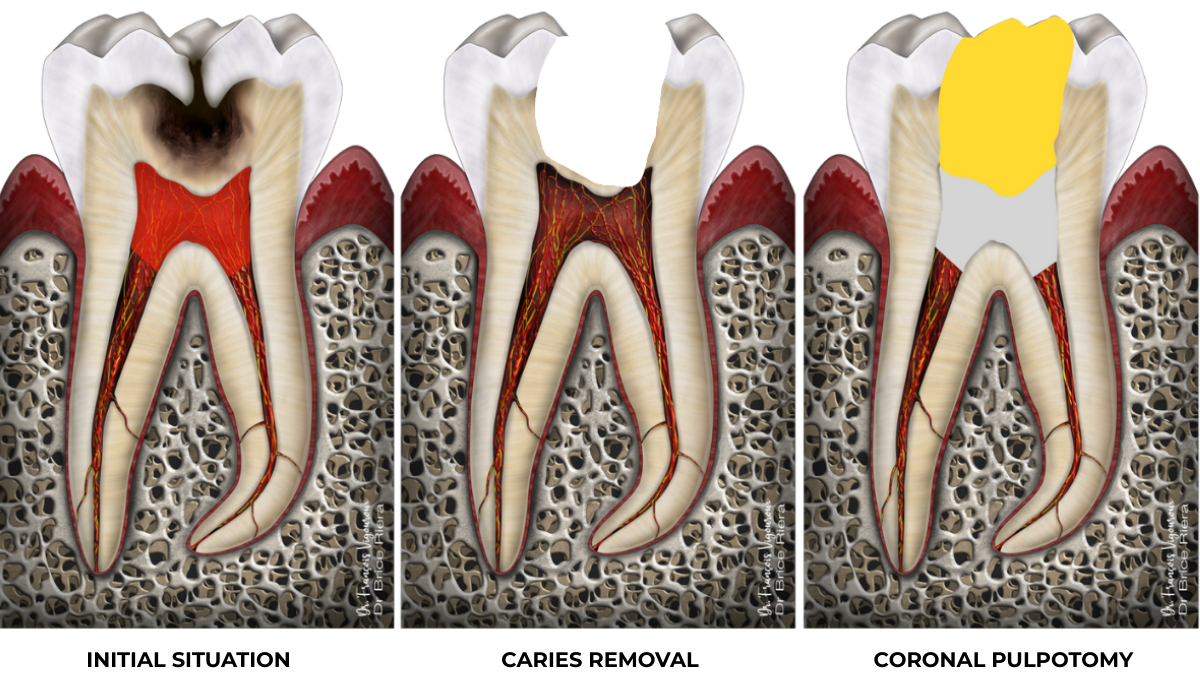
Whether during diagnosis or during the procedure itself, it is possible that the coronal pulp cannot be preserved. The coronal pulp is the pulp located in the pulp chamber (left-hand diagram in transparent red).
On the right, in yellow: coronal restorative material / in grey: bioactive biomaterial (such as bioceramic cement)
Clinical case
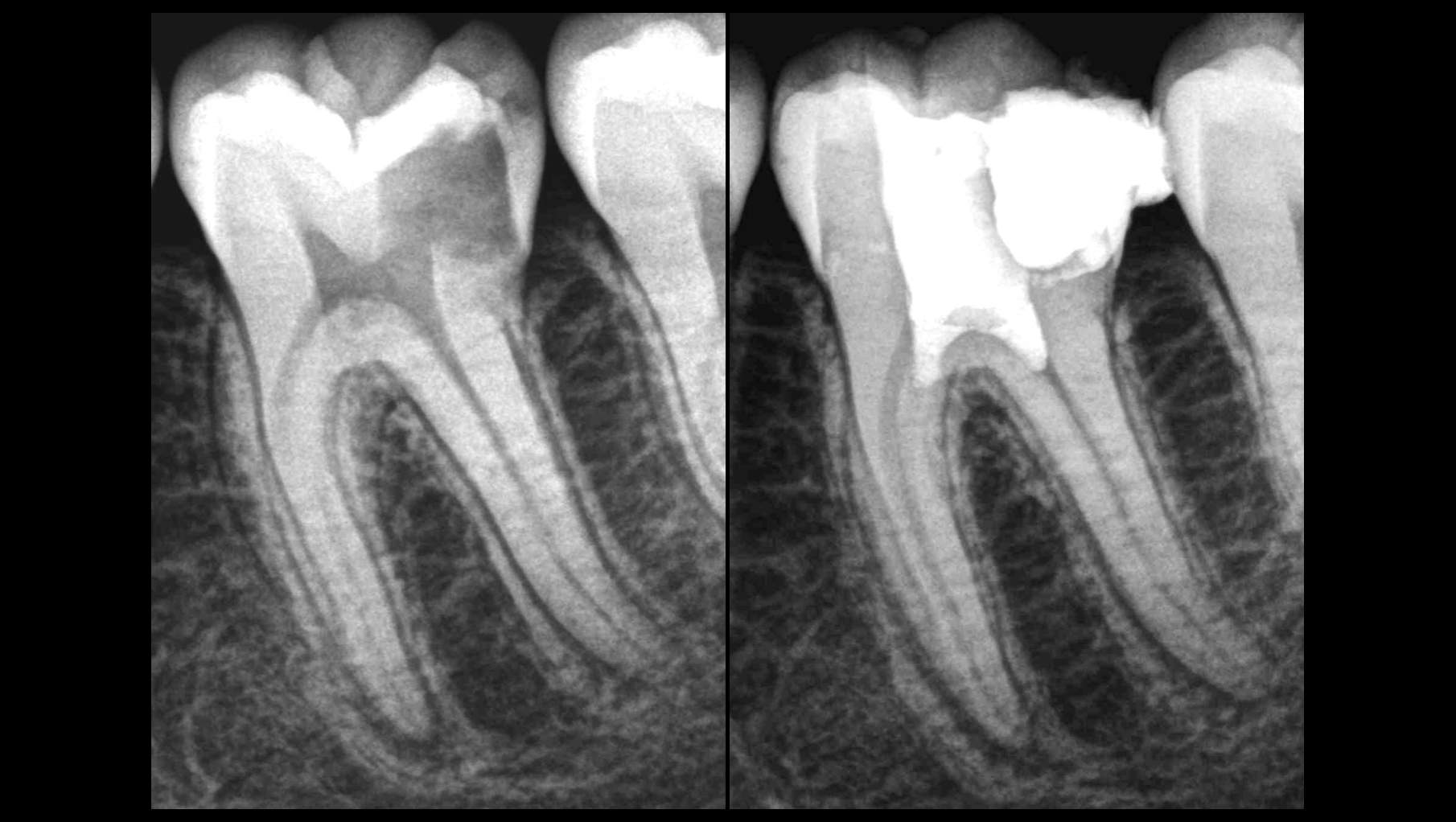
Full pulpotomy: 91.3% success rate
Root canal treatment
There are two situations in which root canal treatment may be indicated.
Either the radicular pulp can no longer be preserved alive (when pulp capping and pulpotomies are no longer possible), generally because the inflammation is too advanced.
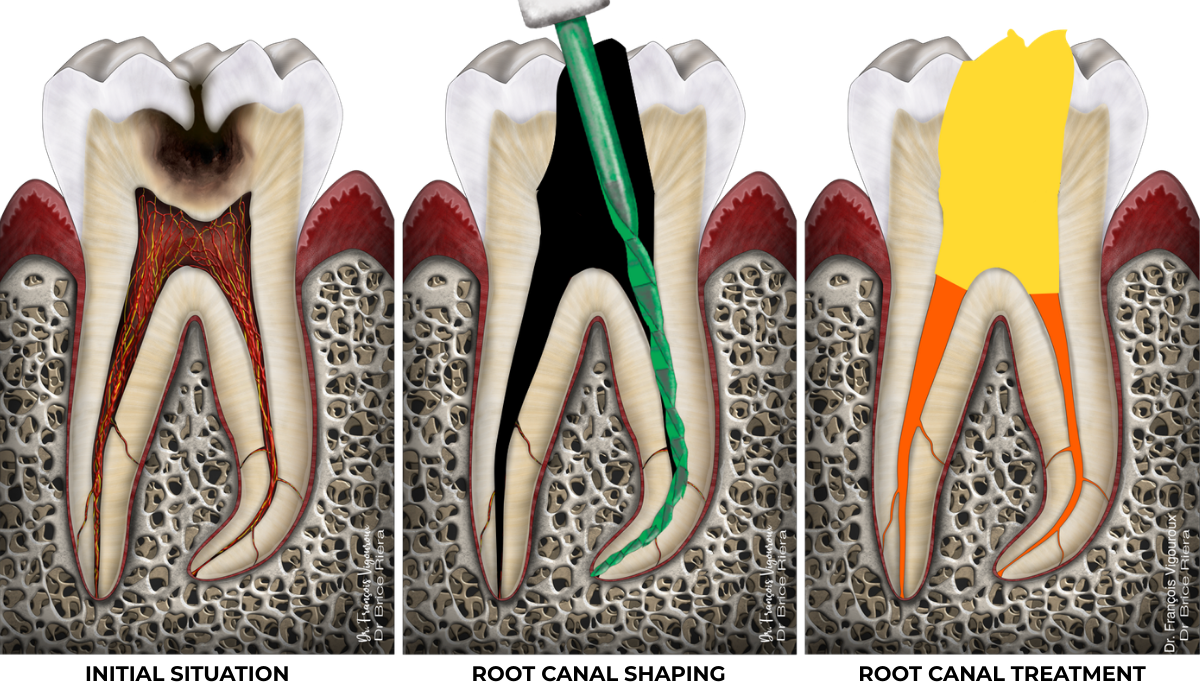
Or the pulp is no longer alive and is then described as necrotic.
Anything in the body that is no longer alive becomes infected. Hence the need to disinfect the inside of the tooth (the endodontium): this is root canal treatment.
If the endodontium is infected, this pulpal necrosis may have caused an inflammatory reaction in the bone, known as an apical lesion:
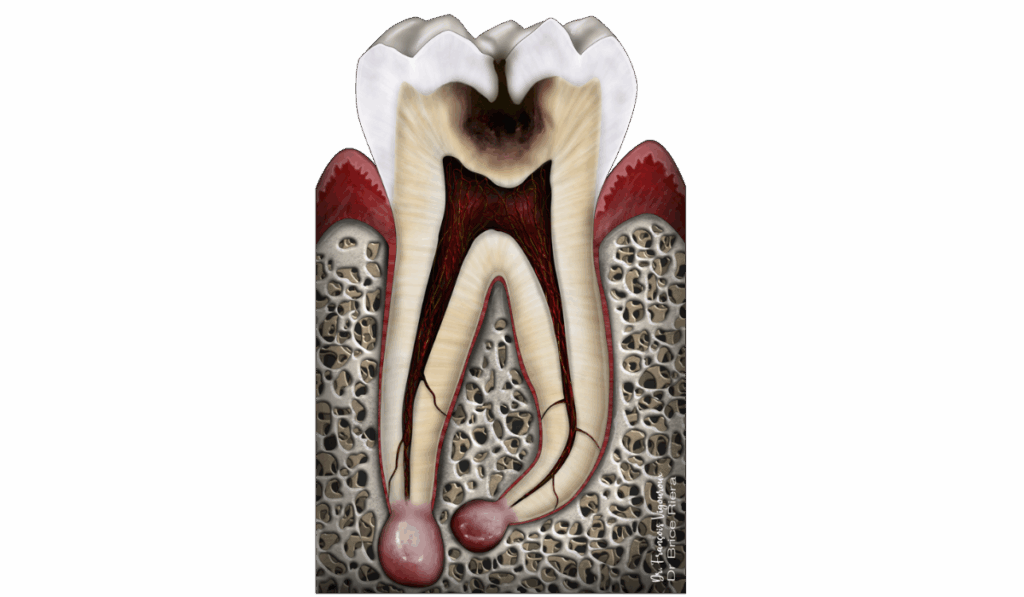
In the absence of an apical lesion, the purpose of root canal treatment is to preserve healthy periapical bone.
When an apical lesion is present, the purpose of root canal treatment is to promote periapical bone healing.
Clinical case
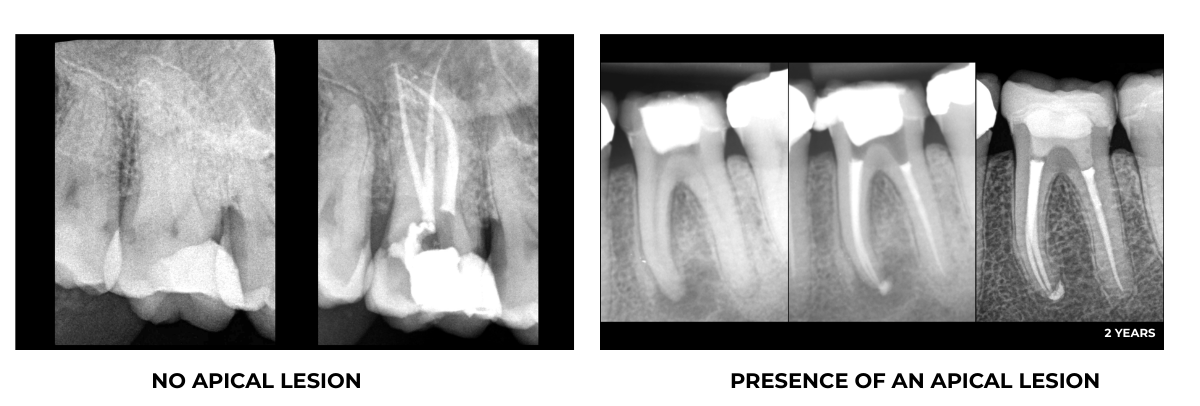
Root canal treatment: 80–95% success rate
Root canal retreatment
A tooth may already have undergone root canal treatment. However, in some cases, this treatment needs to be carried out again. This is known as root canal retreatment.
A few examples of reasons why root canal retreatment may be required:
- A new restoration or prosthetic treatment (inlay, onlay, crown, etc.) is planned.
In the same way that a house requires its foundations to be made sound before reconstruction, a tooth may require root canal retreatment when a new prosthetic restoration is indicated. This applies whether or not an apical lesion is present.
- An intra-canal infection is present despite the existing root canal treatment and is causing an apical lesion.
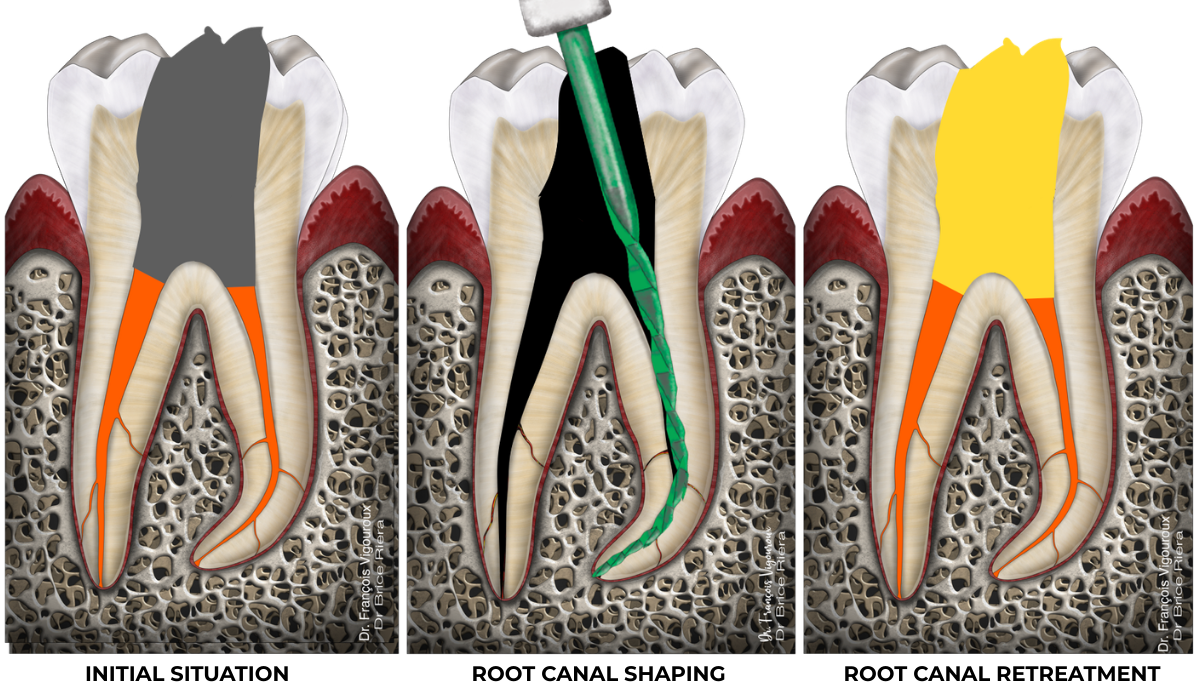
Clinical case
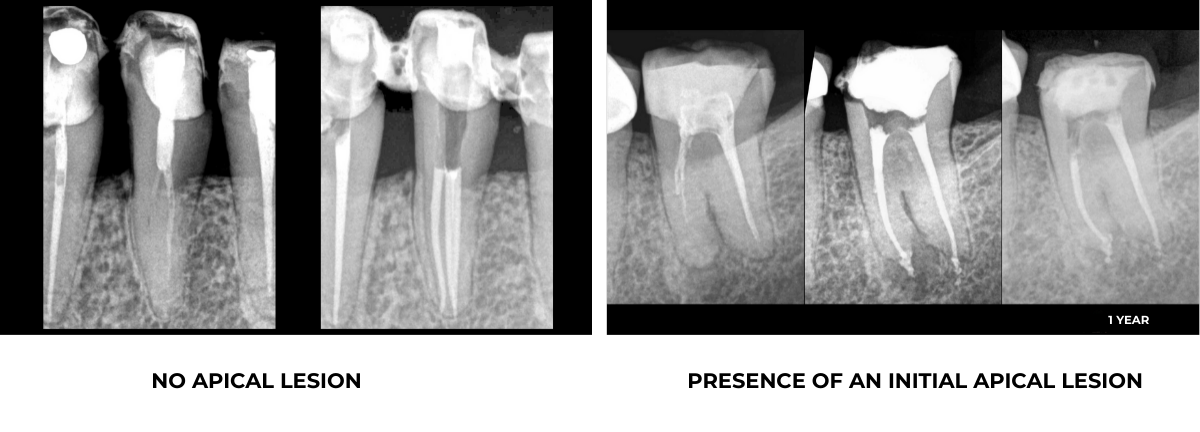
Root canal retreatment: 80–95% success rate
Endodontic surgery
This involves reaching the apex directly by going beneath the gum: your prosthetic restoration remains intact, the apical lesion is removed, and the canal is disinfected using ultrasonic tips specifically designed for this purpose.
This procedure, which lies at the heart of our expertise, is especially valuable when an intra-canal infection is present and your prosthetic restoration is recent and/or perfectly fitted.
The benefit is not only financial (you do not need to have a new prosthetic restoration made), but also biological. Indeed, removing the prosthesis would involve sacrificing a portion of your natural tooth structure.
Clinical case
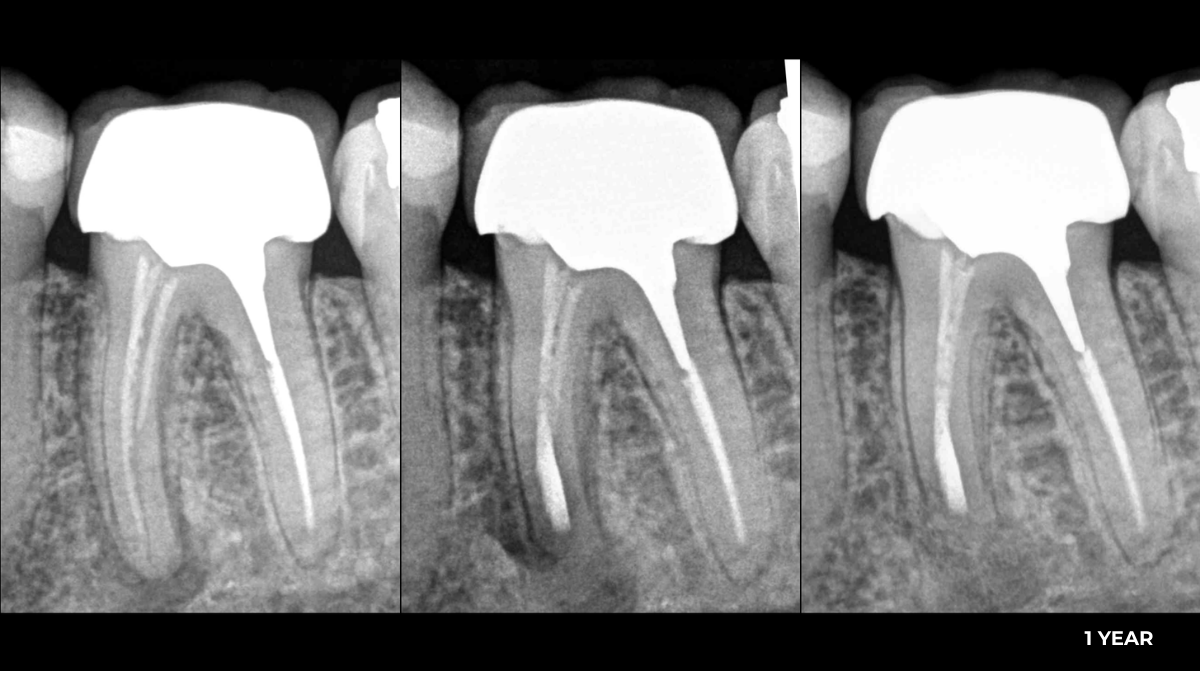
Endodontic surgery: 89% success rate